When I first started learning about blockchain technology, I kept hearing the term smart contracts. At first, I assumed they were just digital versions of traditional contracts. After spending more time understanding how blockchain works, I realized that smart contracts are much more than that. They are one of the biggest innovations in the world of cryptocurrency because they allow agreements to be carried out automatically without depending on a middleman.
Today, smart contracts are used in cryptocurrencies, decentralized finance, gaming, digital art, real estate, and many other industries. They have changed the way people think about online transactions by making them faster, more secure, and more transparent.
In this article, I will explain what smart contracts are, how they work, why they matter, and why I believe they will continue to play a major role in the future of digital technology.
Understanding Smart Contracts
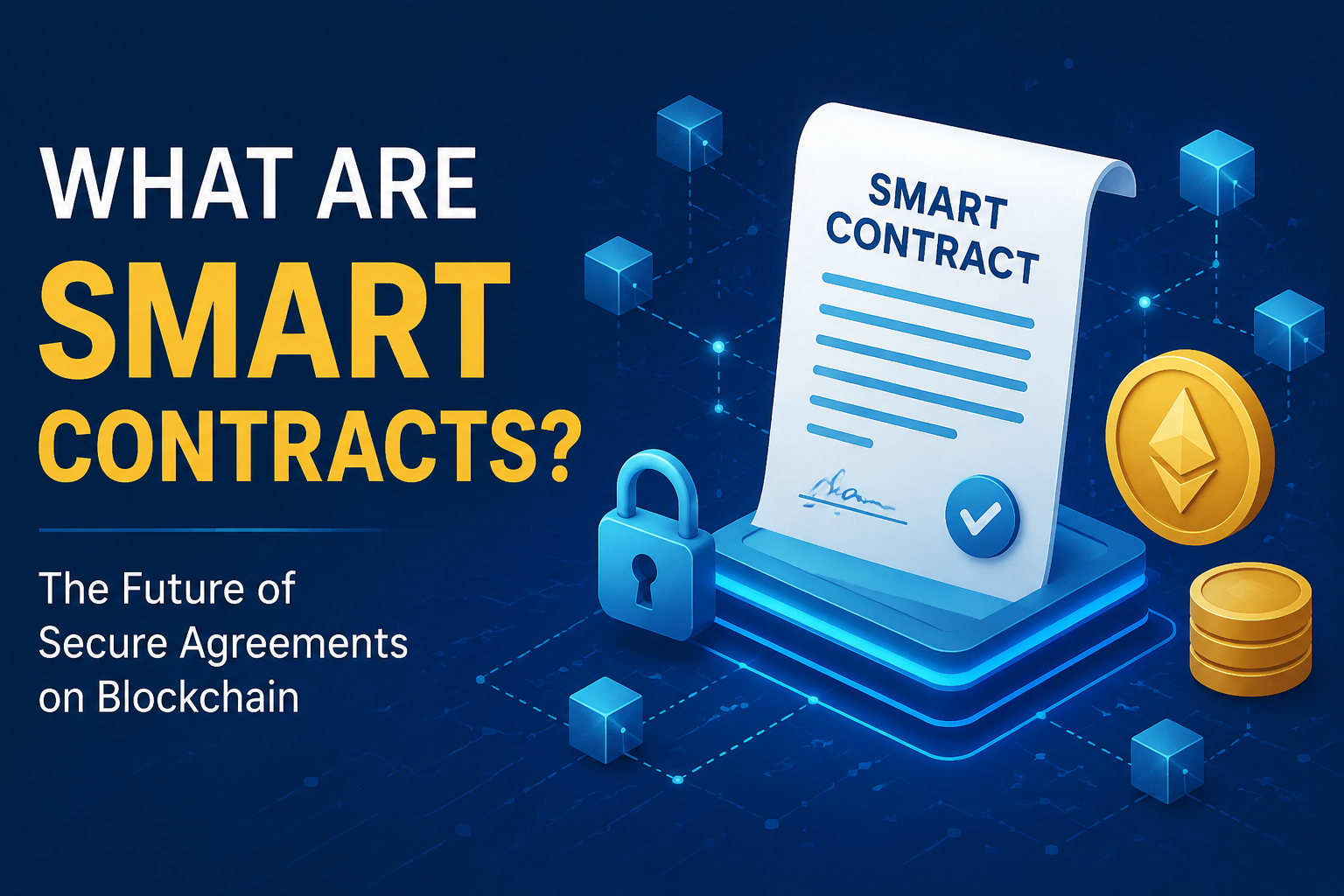
A smart contract is a computer program stored on a blockchain that automatically performs specific actions when certain conditions are met. Instead of relying on lawyers, banks, or third parties to verify and complete an agreement, the smart contract follows the rules written into its code.
Think of it like a vending machine. If I insert the correct amount of money and choose a product, the machine automatically gives me the item. I do not need someone standing beside the machine to approve my purchase. Smart contracts work in a similar way. Once the required conditions are satisfied, the agreement is completed automatically.
This automation removes delays, reduces costs, and minimizes the chances of human error.
The History of Smart Contracts
The idea of smart contracts is much older than cryptocurrency itself. In the 1990s, computer scientist Nick Szabo introduced the concept. He believed digital contracts could automate agreements between people using computer code.
At that time, however, technology was not advanced enough to make his vision practical. There was no decentralized blockchain capable of securely storing and executing these contracts.
Years later, blockchain technology changed everything. Ethereum introduced a platform where developers could create and deploy smart contracts. This allowed thousands of decentralized applications to be built on top of blockchain networks.
Since then, many blockchain projects have adopted smart contracts, making them a key part of the crypto industry.
How Smart Contracts Work
From my perspective, smart contracts are surprisingly simple once I understand the basic process.
First, a developer writes the rules of the agreement in programming code.
The contract is then uploaded to a blockchain network.
Once it is deployed, nobody can easily change its rules unless the contract was designed to allow updates.
When users interact with the contract, it checks whether the required conditions have been met.
If all conditions are satisfied, the contract automatically performs the programmed action.
Every transaction is recorded on the blockchain, making the entire process transparent and easy to verify.
Because blockchain records cannot easily be altered, everyone involved can trust the results without depending on a central authority.
Why They Are Called Smart Contracts
Many people think smart contracts are intelligent like artificial intelligence, but that is not actually true.
They do not think, learn, or make independent decisions.
Instead, they simply follow the instructions written into their programming.
If the conditions say that payment should only be released after a product has been delivered, the contract will only release the funds when that requirement is confirmed.
This predictable behavior makes smart contracts reliable because they always follow the same rules.
Key Features of Smart Contracts
Several characteristics make smart contracts different from traditional agreements.
Automation is one of the biggest advantages. Once activated, they execute automatically without waiting for manual approval.
Transparency is another important feature. Every transaction is recorded on a public blockchain where anyone can verify it.
Security is also a major benefit. Blockchain technology uses advanced cryptography to protect stored information.
Speed is another reason why many businesses are interested in smart contracts. Transactions that normally take several days can often be completed within minutes.
Finally, accuracy improves because computers execute instructions exactly as they are programmed, reducing human mistakes.
Benefits of Smart Contracts
One of the reasons I find smart contracts fascinating is the number of advantages they provide.
They eliminate many unnecessary intermediaries.
Traditional agreements often require banks, lawyers, brokers, or payment processors. Every middleman adds extra time and cost.
With smart contracts, much of this work is handled automatically.
Another major advantage is lower transaction fees.
Since fewer organizations are involved, users often save money.
Smart contracts also improve trust.
Every participant can see the same blockchain data, reducing disputes over what actually happened.
Another benefit is availability.
Blockchain networks operate twenty four hours a day without closing for weekends or holidays.
This means transactions can happen anytime regardless of location.
Real World Uses of Smart Contracts
Smart contracts are no longer just experimental technology.
Today they are used in many different industries.
One of the biggest applications is decentralized finance.
People can lend money, borrow assets, earn interest, or exchange cryptocurrencies without relying on traditional banks.
The rules are handled entirely by smart contracts.
Gaming is another growing area.
Players can own digital items that exist permanently on blockchain networks.
These assets can be traded with other players without depending on a game company.
Supply chain management also benefits from smart contracts.
Products can be tracked from manufacturing to delivery.
Every step is recorded on the blockchain, improving transparency and reducing fraud.
Insurance companies are also exploring smart contracts.
Instead of waiting weeks for claims to be processed, payouts can happen automatically when predefined conditions are met.
Real estate transactions can become faster as ownership records and payments are managed digitally through blockchain technology.
Healthcare organizations are studying ways to securely manage medical records while allowing authorized access through smart contracts.
Smart Contracts and Cryptocurrency
Whenever I use decentralized cryptocurrency platforms, smart contracts are working behind the scenes.
They manage token transfers, staking rewards, decentralized exchanges, lending platforms, and countless other blockchain services.
Without smart contracts, many popular crypto projects simply would not exist.
This is one reason why Ethereum became one of the most valuable blockchain networks in the world.
Its ability to support programmable applications opened countless opportunities for developers.
Other blockchain platforms have also introduced smart contract capabilities, creating healthy competition and encouraging innovation.
Security Challenges of Smart Contracts
Although smart contracts offer many advantages, I believe it is important to understand that they are not perfect. Like any technology, they also come with certain risks and challenges. Since smart contracts are created using computer code, mistakes in programming can create serious problems.
One small coding error can sometimes allow attackers to exploit a contract and steal funds. In the cryptocurrency industry, there have been cases where poorly written smart contracts caused millions of dollars in losses.
This is why developers usually perform security audits before launching smart contracts. These audits help identify weaknesses and improve the safety of the code.
Another challenge is that once a smart contract is deployed on a blockchain, changing it can be difficult. If the original code contains a mistake, fixing the problem may require creating an updated version or making a major adjustment.
From my point of view, this shows that smart contracts require careful planning. They provide automation and efficiency, but they also require developers to have strong technical knowledge.
Smart Contracts and Traditional Contracts
When comparing smart contracts with traditional contracts, the biggest difference is how agreements are managed.
Traditional contracts usually involve written documents and trusted third parties. For example, when buying a house, people may need lawyers, banks, and government organizations to complete the process.
Smart contracts replace much of this manual work with computer code.
A traditional contract depends on people following the agreement, while a smart contract automatically follows the rules programmed into it.
However, this does not mean traditional contracts will completely disappear. Some agreements involve human decisions, emotions, and legal interpretation that computer programs cannot fully understand.
I think the future will probably involve both systems working together. Smart contracts can handle automated processes, while traditional legal systems can manage complex situations.
Common Misunderstandings About Smart Contracts
There are many misconceptions about smart contracts.
The first misunderstanding is that they are completely intelligent. As I mentioned earlier, smart contracts are not like artificial intelligence. They do not understand situations or make personal judgments. They simply execute instructions.
Another misconception is that smart contracts are only related to cryptocurrency. While they became popular because of blockchain and crypto, their applications go much further.
They can be used in finance, healthcare, logistics, entertainment, education, and many other fields.
Some people also believe smart contracts are always completely secure. The reality is that blockchain networks can be highly secure, but the quality of the smart contract code matters a lot.
A poorly designed contract can still create risks.
Understanding these facts helps people see smart contracts realistically instead of viewing them as a magical technology.
The Role of Smart Contracts in Web3
Smart contracts are one of the main foundations of Web3.
Web3 is based on the idea of creating a more decentralized internet where users have greater control over their data, assets, and online identities.
Smart contracts make this possible by allowing applications to operate without centralized companies controlling everything.
For example, decentralized applications use smart contracts to provide services directly between users.
Instead of depending on a company’s servers, these applications run on blockchain networks.
This changes the relationship between users and digital platforms.
In my opinion, this is one of the most exciting aspects of smart contracts because they give people new ways to interact online.
Future Possibilities of Smart Contracts
When I think about the future of smart contracts, I see enormous potential.
As blockchain technology improves, smart contracts could become a normal part of everyday digital activities.
Businesses may use them to automate payments, manage agreements, and improve transparency.
Governments may explore blockchain based systems for records, voting, and public services.
Financial institutions may use smart contracts to make transactions faster and more efficient.
The combination of smart contracts with artificial intelligence could also create new possibilities. AI systems may help analyze information while smart contracts handle automated decisions based on verified data.
However, widespread adoption will depend on solving important issues such as security, regulation, and user experience.
Technology needs to become easier for ordinary people to use before smart contracts become common in daily life.
Why Smart Contracts Matter
In my opinion, smart contracts represent a major change in the way we think about agreements and digital ownership.
For centuries, people have relied on trusted organizations to verify transactions. Smart contracts introduce a different approach where technology itself can enforce rules.
This does not mean humans are no longer needed. Instead, it means technology can remove unnecessary steps and make processes more efficient.
The biggest value of smart contracts is not only saving time or money. Their real importance comes from creating trust in situations where people may not know each other.
Two strangers from different countries can interact through a smart contract without needing a personal relationship or a traditional intermediary.
That ability has the potential to transform global commerce and digital communication.
Challenges Before Mass Adoption
Even though smart contracts have a promising future, several challenges must be solved before they become widely accepted.
Regulation is one major issue. Governments around the world are still developing rules for blockchain technology.
Businesses need clear legal frameworks before they can confidently adopt smart contracts on a large scale.
User experience is another challenge. Many blockchain applications are still complicated for beginners.
Wallets, private keys, and blockchain transactions can confuse new users.
For smart contracts to become mainstream, the technology needs to become simple and accessible.
Scalability is also important. Some blockchain networks struggle with handling large numbers of transactions quickly and cheaply.
Developers are working on solutions to make blockchain networks faster and more efficient.
Final Thoughts on Smart Contracts
After learning about smart contracts, I believe they are one of the most important innovations introduced by blockchain technology.
They have changed the way digital agreements can be created and managed.
Instead of depending completely on traditional systems, smart contracts allow people and businesses to create automated, transparent, and secure processes.
They are already transforming industries like finance, gaming, and supply chain management, and their influence will likely continue to grow.
At the same time, it is important to remember that smart contracts are not a perfect solution for every problem. They need careful development, proper security testing, and better regulations to reach their full potential.
From my perspective, smart contracts are not just a feature of cryptocurrency. They represent a new way of building trust in the digital world.
As technology continues to develop, I believe smart contracts will become an important part of our everyday lives, making digital interactions faster, safer, and more efficient.
The future of smart contracts is still being written, but one thing is clear: they have already changed how we think about agreements, ownership, and trust in the modern world.