When I first heard the word blockchain, I thought it was something only software engineers and cryptocurrency experts needed to understand. The more I learned about it, the more I realized that blockchain is actually a simple idea built on strong technology. It is changing the way people store information, transfer money, and verify transactions without depending on a single authority.
Today blockchain is the technology behind cryptocurrencies like Bitcoin, but its use goes far beyond digital coins. It is being used in banking, healthcare, supply chain management, gaming, and even voting systems. Understanding how blockchain works is much easier when we break it down into simple steps.
In this article, I will explain blockchain technology in beginner friendly language and show you exactly how it works from the moment a transaction begins until it becomes a permanent part of the blockchain.
What Is Blockchain Technology
Blockchain is a digital ledger that records information securely. Instead of storing data in one central location, it keeps copies of the same data across many computers connected through a network.
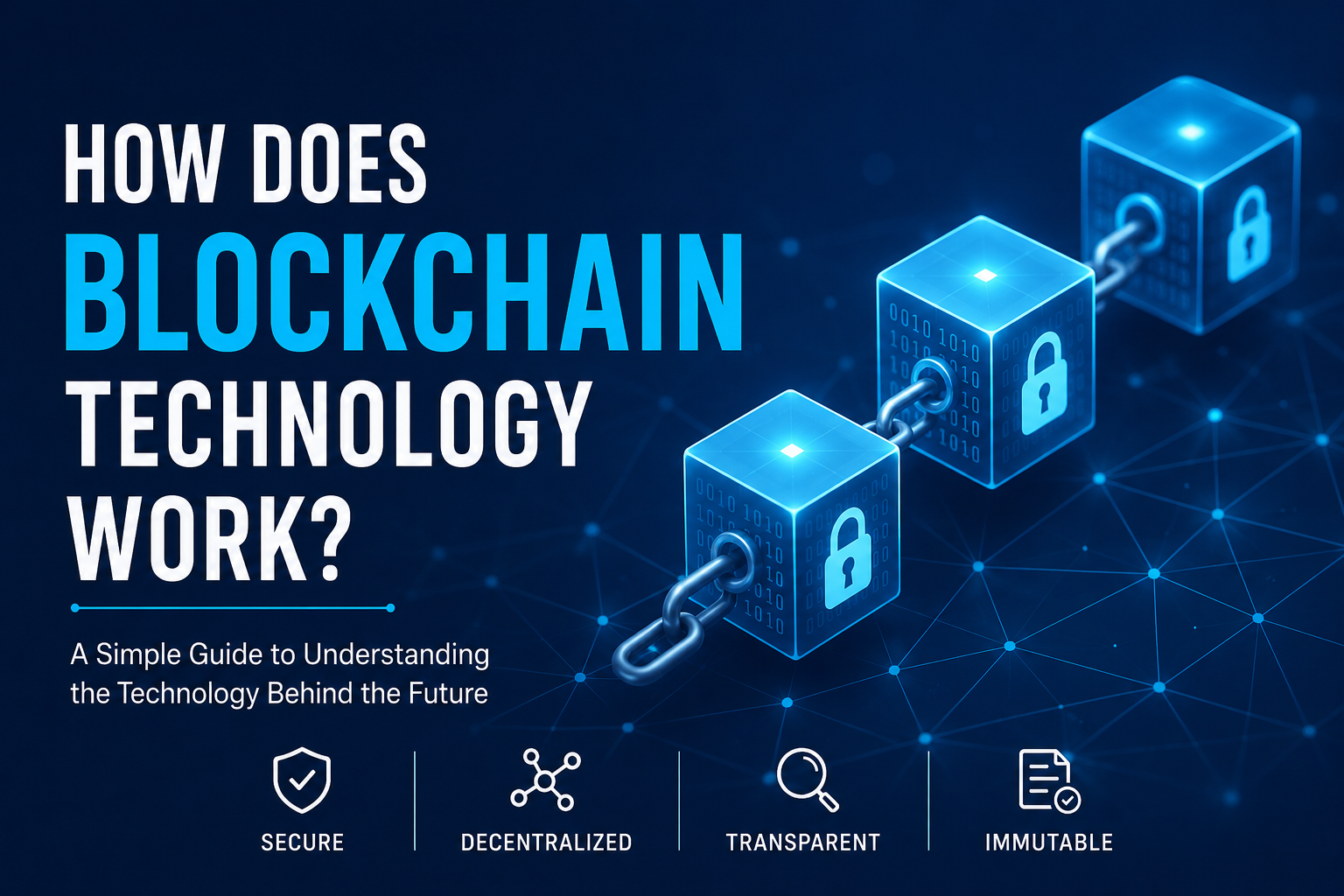
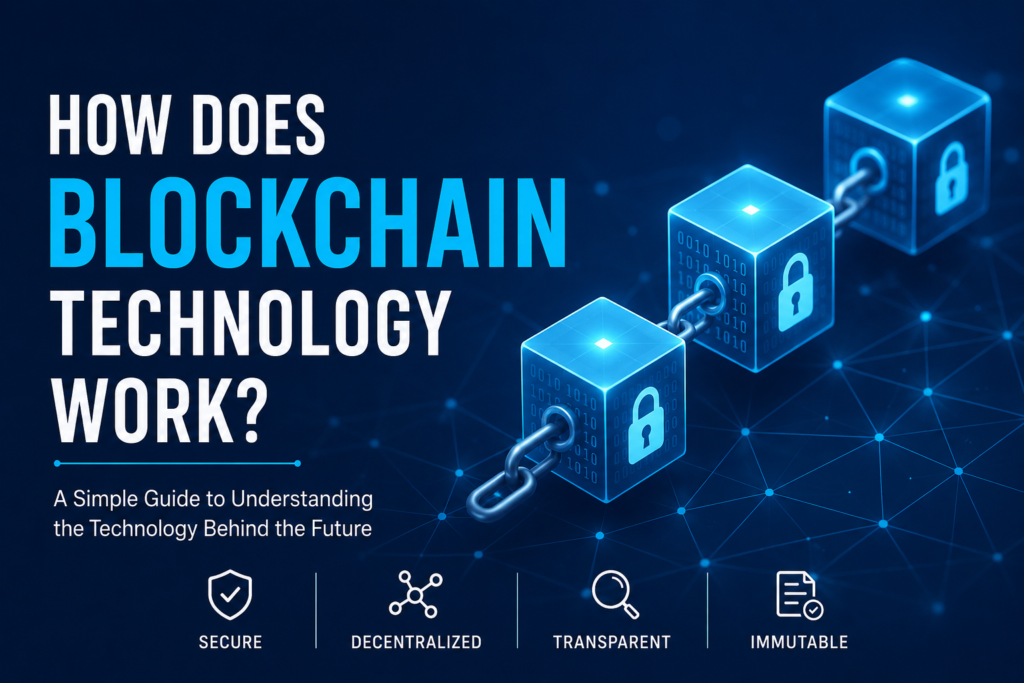
Each group of recorded information is stored inside a block. These blocks are linked together in chronological order, forming a chain. That is why it is called blockchain.
Once information is added to the blockchain, it becomes extremely difficult to change or delete it. This creates a secure and trustworthy system where everyone can verify transactions without relying on a central organization.
Understanding the Basic Idea
Imagine a notebook shared among thousands of people around the world. Every time someone writes a new transaction in the notebook, everyone receives the same updated copy.
If someone tries to erase or change an old page, the other copies immediately show that something is wrong. Because thousands of copies exist, changing the notebook secretly becomes almost impossible.
Blockchain works in a similar way.
Instead of paper notebooks, computers maintain identical digital records that are continuously updated and verified.
The Main Components of Blockchain
To understand how blockchain works, it helps to know its main parts.
Blocks
A block is like a digital container.
Each block stores important information such as transaction details, the time the transaction occurred, and a unique code that connects it to the previous block.
Once a block is full of verified transactions, it becomes part of the blockchain.
Chain
Every new block is connected to the previous one through cryptographic links.
Because each block depends on the one before it, changing one block would require changing every block after it, which is extremely difficult.
Nodes
Nodes are computers connected to the blockchain network.
Every node stores a copy of the blockchain and helps verify transactions.
Thousands of nodes working together make blockchain secure and decentralized.
Cryptography
Blockchain uses advanced mathematical techniques called cryptography.
Cryptography protects data from unauthorized access and ensures that information remains secure.
It also creates unique digital fingerprints called hashes.
How Blockchain Works Step by Step
Now let us see what actually happens when someone sends cryptocurrency using blockchain.
Step One
A user requests a transaction.
For example, Alice wants to send one Bitcoin to Bob.
She enters Bob’s wallet address and confirms the payment.
Step Two
The transaction is sent to the blockchain network.
Instead of going to one company or one bank, it reaches thousands of computers called nodes.
Step Three
The network verifies the transaction.
Nodes check whether Alice actually owns the Bitcoin she wants to send and whether the transaction follows all blockchain rules.
Invalid transactions are rejected immediately.
Step Four
Verified transactions are collected into a new block.
The block contains many transactions waiting to become part of the blockchain.
Step Five
The network agrees that the block is valid.
This agreement is called consensus.
Different blockchains use different methods to reach consensus.
Step Six
The verified block is attached to the previous block.
It now becomes a permanent part of the blockchain.
Step Seven
Bob receives the Bitcoin.
The transaction is complete and anyone can verify it on the blockchain.
What Makes Blockchain Secure
One of the biggest reasons blockchain became popular is its security.
Several technologies work together to keep blockchain safe.
Cryptographic Hashes
Every block contains a unique digital fingerprint known as a hash.
Even changing one letter inside a block completely changes its hash.
If someone tries to modify an old transaction, the hash changes immediately and the network detects the alteration.
Decentralization
Traditional databases are usually controlled by one organization.
Blockchain spreads data across thousands of computers.
Even if one computer fails, the blockchain continues operating.
Transparency
Most public blockchains allow anyone to view transactions.
Although wallet owners remain anonymous through addresses, the transaction history stays visible.
This increases trust within the network.
Immutability
After information enters the blockchain, changing it becomes nearly impossible.
This protects records from fraud and unauthorized editing.
What Is Consensus
Consensus means that the blockchain network agrees a transaction is genuine.
Without consensus, people could spend the same money multiple times.
Different blockchains use different consensus mechanisms.
Proof of Work
Proof of Work is used by Bitcoin.
Special computers called miners solve difficult mathematical puzzles.
The first miner to solve the puzzle gets the right to add the next block.
This method is extremely secure but consumes significant electricity.
Proof of Stake
Proof of Stake is a more energy efficient method.
Instead of solving puzzles, validators are selected based on the amount of cryptocurrency they hold and lock into the network.
Many modern blockchains now prefer Proof of Stake because it uses much less energy.
What Is a Hash
A hash is one of the most important parts of blockchain.
It converts information into a fixed length code.
For example, even changing one number in a transaction creates a completely different hash.
This helps blockchain quickly detect any attempt to modify stored information.
Hashes connect one block to another, creating the secure chain.
Why Blockchain Is Difficult to Hack
People often ask whether blockchain can be hacked.
Technically, no technology is completely impossible to attack.
However, blockchain is extremely difficult to compromise because an attacker would need to change the same data on thousands of computers at almost the same time.
They would also need enough computing power to convince the network that their fake version is correct.
For large public blockchains like Bitcoin, this would require enormous resources and cost billions of dollars.
Real World Uses of Blockchain
Blockchain is much more than cryptocurrency.
Today many industries are adopting blockchain technology.
Banking
Banks use blockchain to speed up international payments.
Transactions that once required several days can now finish much faster.
Healthcare
Medical records can be stored securely while allowing authorized doctors to access accurate patient information.
Supply Chain
Companies track products from factories to customers.
Every movement is recorded on the blockchain, reducing fraud and improving transparency.
Real Estate
Property ownership records become easier to verify and harder to fake.
Voting Systems
Blockchain can help create secure digital voting systems with transparent election records.
Education
Schools and universities can issue digital certificates that employers can verify instantly.
Advantages of Blockchain Technology
Blockchain offers many important benefits.
It improves security by using encryption and decentralization.
It increases transparency because transactions can be verified.
It reduces fraud by making records difficult to change.
It removes unnecessary middlemen in many industries.
It allows faster international transactions.
It improves trust between people who do not know each other.
It provides permanent records that remain available for future verification.
Limitations of Blockchain
Although blockchain has many advantages, it also has some challenges.
Some blockchain networks process transactions more slowly than traditional payment systems.
Proof of Work consumes a large amount of electricity.
Building blockchain applications can be expensive.
Government regulations continue to evolve.
Some people still find blockchain technology difficult to understand.
Scalability remains a challenge for certain blockchain networks handling millions of users.
Blockchain and Cryptocurrency
Many beginners think blockchain and cryptocurrency are the same thing.
They are closely related but different.
Blockchain is the technology.
Cryptocurrency is one application built on top of blockchain.
Just as the internet supports websites, blockchain supports digital currencies.
Without blockchain, cryptocurrencies like Bitcoin and Ethereum would not function securely.
The Future of Blockchain
I believe blockchain technology will become even more important in the coming years.
More businesses are exploring decentralized applications.
Governments are testing digital currencies.
Banks are investing heavily in blockchain research.
Supply chains are becoming more transparent.
Smart contracts are automating agreements without requiring lawyers or middlemen.
As technology improves, blockchain is likely to become faster, cheaper, and more environmentally friendly.
Final Thoughts
When I first started learning about blockchain, it seemed like a complicated subject filled with technical language. After spending time understanding the basics, I realized the idea is actually straightforward. Blockchain is simply a secure digital record shared across many computers instead of being controlled by one organization.
Every transaction is verified, grouped into blocks, connected through cryptography, and stored permanently. This combination of decentralization, transparency, and security makes blockchain one of the most innovative technologies of the modern digital world.
Whether you are interested in cryptocurrency, online security, investing, or emerging technology, understanding how blockchain works gives you a strong foundation for the future. As more industries adopt blockchain solutions, knowing its basic principles will become increasingly valuable and help you better understand the digital economy that continues to grow every year.